






Amid the wave of hospital closures, why has the allergen testing industry joined hands with the Department of Allergy to achieve counter-trend growth?
2026.01.17 | 178
The Healthcare Industry in 2025
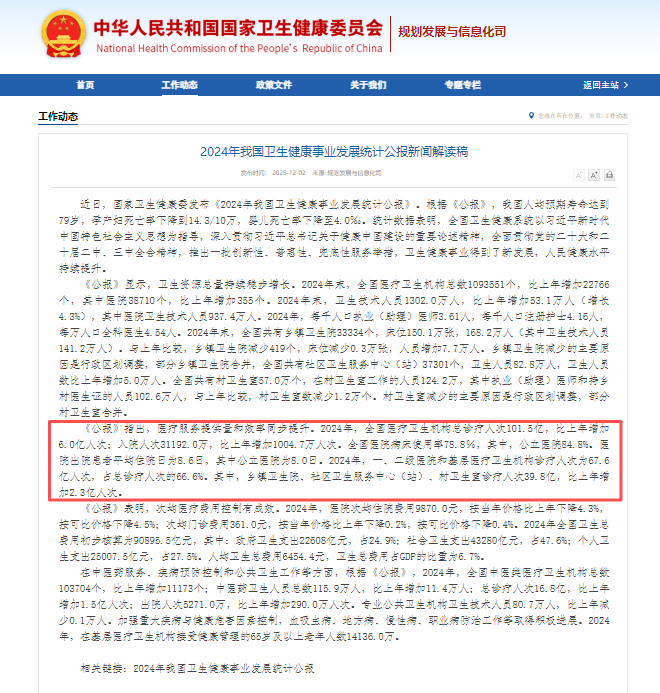
On one side, medical service demand is soaring: the total number of outpatient and emergency visits at medical and health institutions nationwide exceeded 10.15 billion in 2024, with inpatient admissions surpassing 310 million, and the resident hospitalization rate topping 20%—a figure far exceeding that of most developed countries. On the other side, however, the industry is gripped by a biting chill: by the third quarter of 2025, over 1,200 private hospitals had ceased operations, averaging seven closures per day, and the Luxinan Hospital, which had received an investment of 3 billion yuan, slid into bankruptcy liquidation. This starkly exposes the profound contradictions plaguing China’s current healthcare system. This "ice-and-fire" paradox is the result of the overlap and interplay of multiple structural, institutional, and market factors.
This industry reshuffle is not a simple "sectoral decline", but rather a profound structural adjustment and value reshaping.
Growing Pains of the Transition from "Scale Expansion" to "Value-Based Healthcare"
The traditional hospital revenue model, which relied on expanding bed capacity and increasing medical equipment, is no longer sustainable. Hospitals that will survive and thrive in the future must possess robust cost control capabilities, clinical pathway management skills, and the ability to deliver cost-effective medical services. This is precisely the direction driven by the DRG/DIP payment reform.
Polarization Between "Stronger Players Getting Stronger" and "Survival Through Differentiation"
- Leading public hospitals: Endowed with formidable advantages in brand reputation, talent pool, scientific research, and medical technology, these institutions excel at attracting patients with complex and severe conditions, conducting cutting-edge medical procedures, and securing research funding. They are poised to further consolidate their positions amid the ongoing reforms.
- Successful private hospitals: These facilities must abandon the "comprehensive hospital" model that directly competes with public hospitals. Instead, they should focus on specialized niche areas (such as ophthalmology, dentistry, obstetrics and gynecology, medical aesthetics, rehabilitation, nursing care, high-end physical examinations, and rare disease treatment), provide differentiated services (such as patient-centric care, international medical services, and full-course disease management), or complement public hospitals by undertaking downstream services like rehabilitation, nursing, and chronic disease management.
Restructuring of the Supply Chain and Value Chain
The chill sweeping through the healthcare sector will ripple upward to upstream pharmaceutical and medical device suppliers, and downstream to third-party service providers (including clinical laboratories, medical imaging centers, and disinfection supply services). Supply chain service providers characterized by centralization, large-scale operations, and high efficiency will be presented with more opportunities.
Why Has the Department of Allergy Emerged as a Counter-Cyclical Growth Driver Amid the Closure Wave?
In sharp contrast to the contraction across the broader healthcare industry, the Department of Allergy is experiencing a golden age of growth in both volume and quality. The core drivers behind this boom are the expanding base of allergy sufferers and the unmet demand for allergy diagnosis and treatment.
I. Outbreak of Rigid Market Demand
1. Rapid Rise in the Prevalence of Allergic Diseases
China has over 300 million patients with allergic rhinitis and approximately 45.7 million asthma patients. The number of people affected by atopic dermatitis and food allergies is also on a steady upward trend, driven by factors such as environmental changes and evolving lifestyles. The patient population spans the entire life cycle, from children to the elderly, and outpatient visits for allergies are growing at an annual rate of 15% to 20%.
2. Iteration of Diagnostic and Therapeutic Technologies
The widespread application of precision allergen detection technologies (including component-resolved diagnosis and microfluidic chip technology) and biological agents (such as omalizumab and dupilumab) has transformed the department from a "peripheral specialty" into a clinical department with high treatment conversion rates. Allergen immunotherapy requires long-term patient management, which fosters stable patient loyalty and recurring follow-up revenue.
II. Policy and Payment Incentives
1. Policy Support for Specialty Development
The Guidelines for the Construction and Management of Allergy Departments issued by the National Health Commission has promoted the establishment of independent allergy departments in hospitals at or above the second level. In some provinces, allergen testing and immunotherapy have been included in medical insurance reimbursement, lowering the financial threshold for patients.
2. Prominent Economic Benefits
Allergy-related testing items (such as allergen screening) boast high gross profit margins, and the reagents and consumables involved can form a closed supply chain loop. Although biological agents carry a high unit price, the rigid clinical demand for them drives the growth of the department’s drug proportion and overall revenue.
III. Strategic Choice for Hospital Operations
1. A Leverage for Differentiated Competition
Amid the performance assessment pressure on public hospitals (the "National Hospital Assessment") and the survival challenges faced by private hospitals, the allergy department has emerged as a cost-effective, high-return option for differentiation: it requires low equipment investment (relying mainly on testing reagents), does not need large-scale operating rooms, and has a relatively shorter physician training cycle. It can also collaborate with departments such as otorhinolaryngology, dermatology, pediatrics, and respiratory medicine to develop multidisciplinary treatment models, thereby enhancing the hospital’s overall service capabilities.
2. An Entrance for Patient Flow
Allergic symptoms are typically chronic and recurrent, motivating patients to seek medical care proactively. This easily cultivates a cohort of long-term follow-up patients, who can be channeled to other departments of the hospital (such as respiratory medicine, immunology, and traditional Chinese medicine).
IV. Rising Public Awareness and Upgraded Health Consumption
1. Increased Public Awareness of Allergic Diseases
The public’s perception of allergies as a medical condition has shifted from "neglect" to proactive medical consultation. Particularly, middle-class families are paying growing attention to childhood allergies. Environmental issues (such as pollen seasons and dust mites) have exacerbated allergic symptoms, spawning sustained medical demand.
2. Highlighted Consumer Healthcare Attributes
Allergy treatment combines the characteristics of "medical necessity" and "consumption upgrading" (e.g., high-end immunotherapy and personalized prevention plans), making patients more willing to pay out of pocket. Online consultation platforms (such as allergy specialty popular science and online medical advice) have further educated the market, shortening the decision-making process for patients seeking medical treatment.
The Future and Responsibilities of the Department of Allergy and the Allergen Testing Industry in the Second Half of the Reshuffle
For the Department of Allergy, the ever-growing demand from allergy sufferers provides a solid foundation for development, while policy support for specialized niches offers a crucial opportunity. The core "key to survival" for the specialty to break through lies in accurately aligning with payment rules, building distinctive competitive advantages, and innovating service models. Meanwhile, the allergen testing industry, with its strong preventive nature, high consumption relevance, and low institutional dependence, is standing at the tipping point of the transition from old to new development models. The right strategy is not to contract for survival, but to take the initiative and actively expand. The industry’s goal should be to become an indispensable new-type infrastructure for safeguarding the public’s allergy-related health needs in the post-hospital era.


